
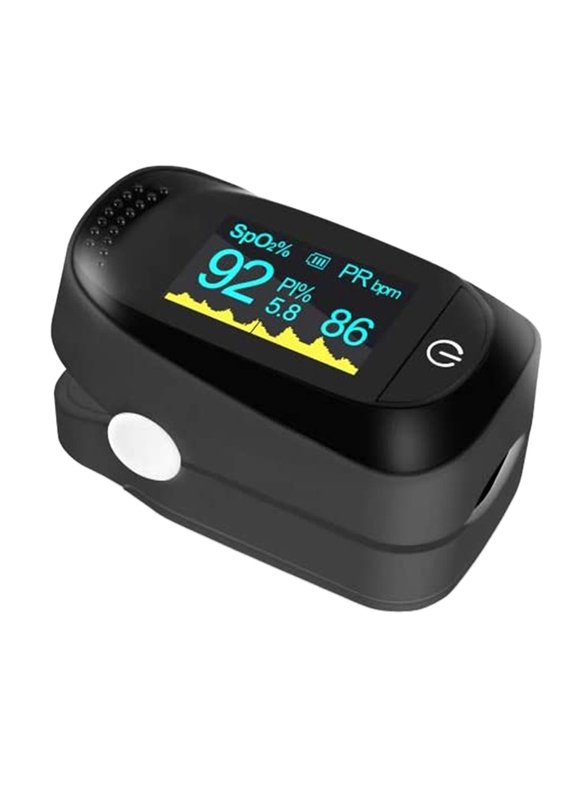
A pulse oximeter uses a small sensor, usually clipped to a fingertip, to estimate blood oxygen saturation (SpO2) and pulse rate. It is used in clinics, hospitals and home care. Choosing the right one comes down to who will use it, where, and how often.
Who needs a pulse oximeter?
Clinics use them for quick checks, wards and care centres use them for repeated monitoring, and some patients use them at home on their doctor’s advice. If the device is for home use, ask your doctor when to measure and how to read the result.
Fingertip or handheld?
Fingertip models are compact and well suited to quick spot checks. Handheld and bedside models usually offer a larger display, interchangeable probes for different patients, alarms and memory for repeated or continuous monitoring, which makes them a better fit for clinics and wards.
| Fingertip | Handheld / bedside | |
|---|---|---|
| Best for | Quick checks, home, first aid bag | Clinics, wards, repeated monitoring |
| Display | Small | Larger and clearer |
| Probes | Built in | Interchangeable |
| Alarms and memory | Often limited | Usually available |
What to check before you buy
- Display: it should be large, bright and easy to read from different angles.
- Probe fit: make sure the probe suits your patients, including children if you see them.
- Alarms and memory: useful if readings are monitored over time.
- Power: check battery life or charging, and whether replacement batteries are easy to find.
- Cleaning: choose surfaces that tolerate the disinfectant wipes you use between patients.
- Specifications: ask the supplier for the accuracy range and the conditions it was tested under, rather than relying on marketing claims.
- Supplier and support: ask about warranty, spare parts and who to contact if something goes wrong after purchase.
What can affect a reading
Cold fingers, poor circulation, nail polish or artificial nails, movement and strong ambient light can all affect a reading. Warm the hands, remove nail polish where possible and keep the hand still during measurement.
A guide, not a diagnosis
A pulse oximeter is a monitoring aid. Readings should be interpreted by a healthcare professional, and anyone who feels unwell should seek medical advice whatever the number on the screen.
Frequently asked questions
Is a fingertip oximeter suitable for a clinic?
It works for quick checks, but clinics and wards that monitor patients more than once often need a handheld model with a larger display and interchangeable probes.
Does nail polish affect the reading?
Dark nail polish or artificial nails can affect the reading. Remove them where possible or try another finger.
How do I clean it between patients?
Wipe the parts that touch the skin with the disinfectant wipes allowed by the manufacturer’s instructions and let it dry before the next use.
Can it be used on children?
Some models come with probes designed for children. Check with the supplier before buying and ask a doctor about appropriate use.
Can you quote for clinics or larger quantities?
Yes. Send us your requirements and Toulin Medical in Abu Dhabi will send you a quotation.
Explore our range
Browse our diagnostic and monitoring equipment, including the A2 Pulse Oximeter, see our emergency and first aid supplies and our guide to workplace first aid kits, or request a quotation from Toulin Medical in Abu Dhabi.